
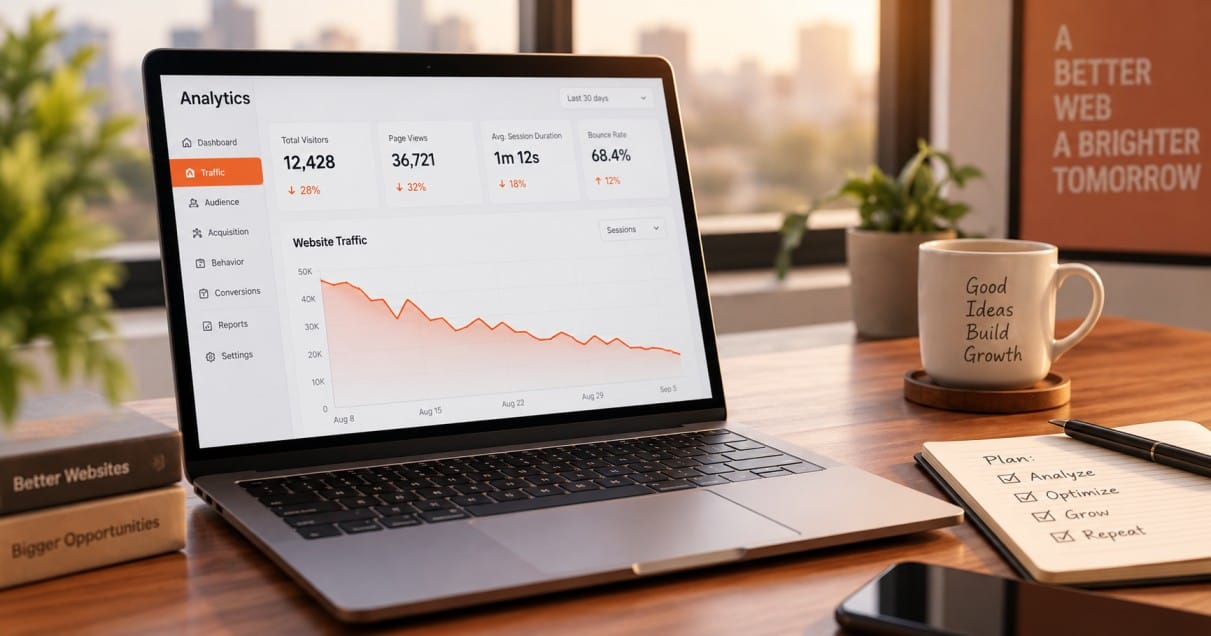
Building a WordPress website is only the first step. A professional design, useful services, and published blog posts do not automatically bring visitors from Google. If traffic is low, the problem is usually connected to SEO, keyword targeting, technical performance, content quality, or website authority.
The good news is that most of these problems can be identified and fixed systematically.
1. Your WordPress Website Is Targeting the Wrong Keywords
One of the most common mistakes is choosing keywords based only on search volume. Highly competitive keywords can take significant time and authority to rank for.
We should instead target a combination of long-tail, location-specific, and commercially relevant keywords. For example, rather than targeting “WordPress website,” a business could target “WordPress website development for small businesses” or “WordPress developer in Mumbai.”
The goal is not simply to attract more visitors. We need to attract the right visitors.
2. Your WordPress Website Has Weak On-Page SEO
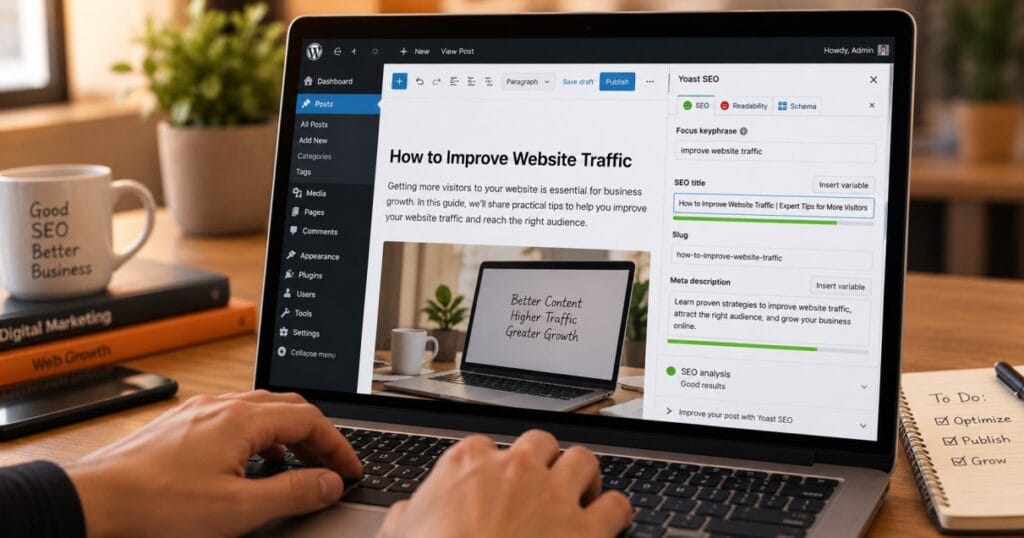
Every important page should clearly communicate its topic to search engines and users.
We should optimize the SEO title, H1 heading, subheadings, URL, introductory content, images, internal links, and meta description. Keywords should appear naturally rather than being repeated unnaturally.
Each page should also answer the searcher’s actual question better than competing pages. Repeating a keyword 20 times will not compensate for weak content.
3. Your Website Is Too Slow
A slow WordPress website creates a poor user experience and can hurt search performance.
We should check:
- Image file sizes
- Hosting performance
- Caching
- Unnecessary plugins
- JavaScript and CSS
- Database performance
- Core Web Vitals
Large images and excessive plugins are particularly common problems. We should remove anything that does not provide a genuine benefit and optimize the assets that remain.
4. Your Website Is Not Mobile-Friendly

A large percentage of website visits happen on mobile devices. A website that looks excellent on desktop but is difficult to use on a phone is still a poorly optimized website.
We should ensure that menus, buttons, forms, text, images, and navigation work properly across different screen sizes.
5. Your Content Is Not Strong Enough
Publishing ten short articles is not necessarily better than publishing three genuinely useful ones.
We should create content that demonstrates experience, expertise, relevance, and practical usefulness. Instead of writing generic articles that repeat information found everywhere, we should add examples, original insights, comparisons, processes, statistics where appropriate, and clear answers to related questions.
Updating existing content can also be valuable when information has become outdated.
6. Your Internal Linking Is Weak
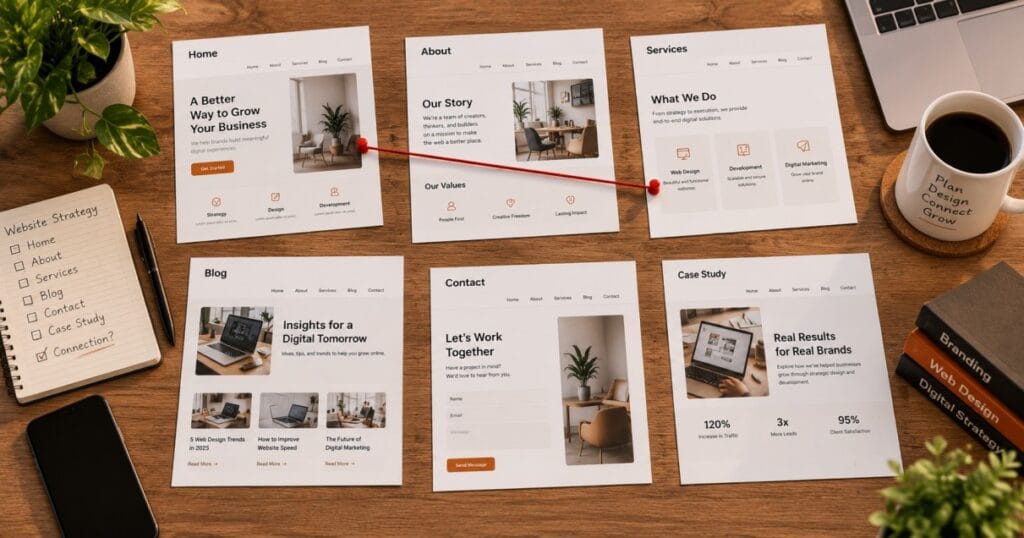
Internal links help users discover related information and help search engines understand how different pages on our website are connected.
We should create logical topic clusters. A detailed article can link to relevant service pages, supporting guides, FAQs, and related articles using descriptive anchor text.
For example, an article about WordPress performance can naturally link to a page about WordPress website optimization services.
7. Your WordPress Website Has Little Authority
Even excellent content can struggle when a website has little external authority.
We should earn relevant backlinks through original research, useful resources, digital PR, partnerships, industry publications, and genuinely valuable content. Buying large quantities of low-quality links is not a sustainable strategy.
Quality and relevance matter more than simply accumulating hundreds of links.
8. Technical SEO Could Be Blocking Google
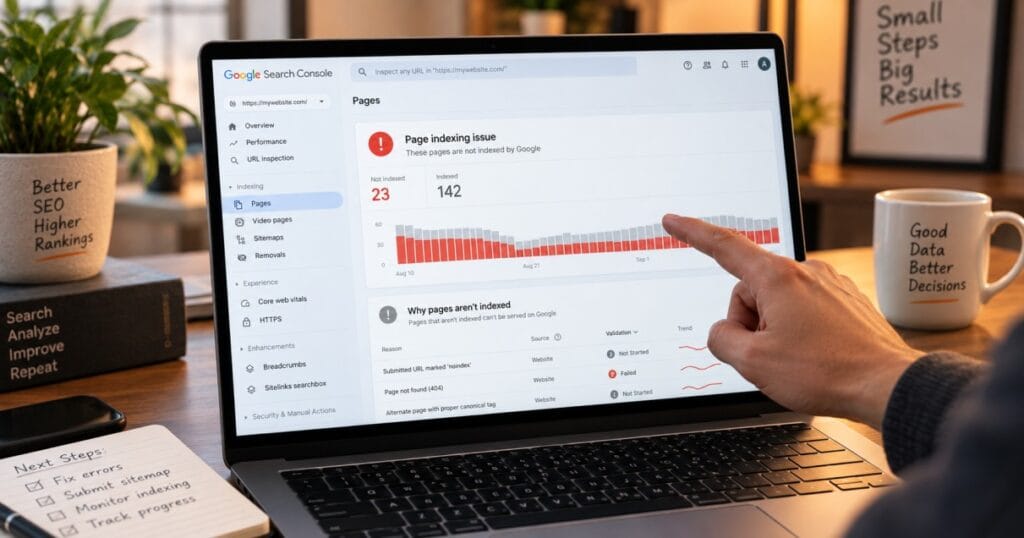
Before producing more content, we should confirm that search engines can actually crawl and index the important pages.
We should check:
- Google indexing status
- XML sitemap
- Robots.txt
- Canonical URLs
- Noindex directives
- Broken links
- Redirects
- HTTPS
- Duplicate pages
A technically strong website gives search engines a much clearer path through its content.
9. How We Can Fix a WordPress Website With No Traffic
We should work in the following order:
First, audit technical SEO and indexing.
Second, identify realistic keywords based on competition and search intent.
Third, improve the most important existing pages.
Fourth, build useful supporting content around important topics.
Fifth, strengthen internal linking between related pages.
Sixth, improve speed, mobile usability, and conversion paths.
Finally, consistently build authority through legitimate external mentions and backlinks.
This approach is more effective than publishing random blog posts and hoping traffic eventually appears.
Frequently Asked Questions
Why is my WordPress website not getting traffic?
The main causes can include poor keyword targeting, weak content, technical SEO problems, slow performance, poor mobile usability, weak internal linking, and insufficient website authority.
How long does WordPress SEO take?
There is no fixed timeframe. New websites usually need time to establish relevance and authority, while established websites may see improvements sooner after significant optimization.
How do we get Google traffic to a WordPress website?
We should combine keyword research, high-quality content, technical SEO, on-page optimization, internal linking, performance improvements, and relevant authority-building activities.
Is WordPress good for SEO?
Yes. WordPress can provide a strong foundation for SEO, but the platform itself does not guarantee rankings. The website still needs technically sound implementation, useful content, good performance, and appropriate optimization.
How many blog posts do we need to get traffic?
There is no magic number. Ten highly relevant, comprehensive articles can be more valuable than 100 thin articles that target random keywords.
Conclusion
If a WordPress website is not getting traffic, publishing more content blindly is rarely the best solution. We should first identify whether the problem is keyword targeting, content quality, technical SEO, performance, indexing, or authority.
The most effective strategy is to audit the website, target realistic search terms, improve existing pages, create genuinely useful content, strengthen internal linking, and build authority consistently.
Traffic does not come from WordPress alone. It comes from giving search engines a technically accessible website and giving users a genuinely useful reason to visit it.