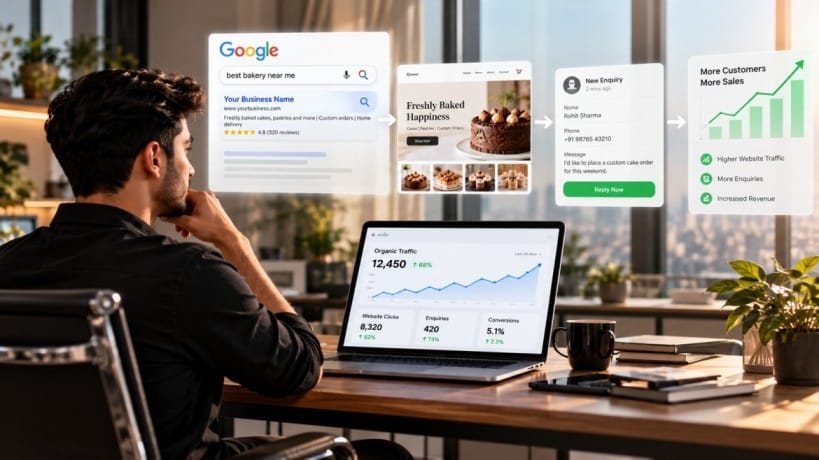
When customers need a product or service, one of the first places they turn is Google. They search for solutions, compare businesses, read reviews, visit websites, and eventually decide who deserves their money. But if your small business does not appear when those searches happen, your competitors are getting the opportunity instead. This is exactly where small business SEO services can make a difference. Search engine optimisation is not simply about ranking for random keywords or generating more website traffic. The real goal is to attract people who are already searching for what your business offers and turn those searches into meaningful enquiries, calls, bookings, or sales.
Why Small Businesses Need SEO
Large companies often have established brands, huge marketing budgets, and years of online authority. Small businesses cannot always compete with them on budget, but they can compete on relevance. A well-optimised website can target specific services, customer problems, locations, and search queries that matter to the business.
Imagine someone searching for a service you provide. If your website appears on the first page with a useful service page, clear information, strong credibility, and an easy way to contact you, you have already entered the customer’s buying journey. If your competitor appears while your business is nowhere to be found, the customer may never know you exist.
That is why effective small business SEO services should focus on qualified search traffic rather than vanity numbers. Ten highly relevant visitors can be more valuable than hundreds of visitors who have no intention of becoming customers.
What Do Small Business SEO Services Include?

SEO is not one single activity. A successful strategy combines several areas that work together to improve visibility, relevance, authority, and conversions.
1. Keyword Research
Keyword research identifies the phrases your potential customers actually use when searching for products and services. The goal is not to repeat one keyword dozens of times. Instead, the strategy should understand the intent behind different searches.
For example, someone searching for “what is SEO” is looking for information, while someone searching for “small business SEO services” is much closer to evaluating an SEO provider.
Good keyword research helps businesses create the right page for the right search intent.
2. Technical SEO
Even excellent content can struggle if a website has technical problems. Technical SEO examines areas such as website structure, crawling, indexing, mobile usability, page performance, broken links, redirects, metadata, and other issues that can affect how search engines understand a website.
A technically healthy website gives search engines a cleaner path to discover and understand important pages.
3. On-Page SEO
On-page SEO focuses on improving the actual pages users see. This includes titles, headings, content structure, internal links, images, URLs, and relevant keywords.
The important part is natural optimisation. Google states that its systems are designed to reward helpful, reliable, people-first content rather than content created primarily to manipulate search rankings.
That means your pages should answer real customer questions instead of simply repeating keywords.
Create Service Pages That Convert
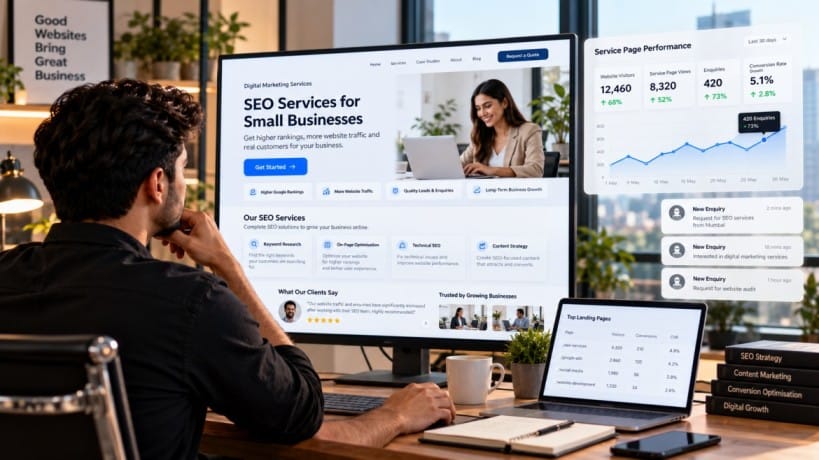
One of the biggest SEO mistakes small businesses make is relying on a single generic services page.
If your business provides multiple services, each important service should have a dedicated page explaining what it does, who it helps, what problems it solves, and why customers should consider your business.
A strong service page can target commercially valuable searches while also helping visitors make a decision.
For example, instead of having one page titled “Our Services,” a digital marketing agency could create dedicated pages for SEO, web development, and social media marketing. This gives each service a clearer search purpose and creates more opportunities to appear for relevant queries.
The page should also include a clear call to action. Ranking is useful, but a ranking that produces no enquiries is not a business result.
Local SEO Can Be Powerful for Small Businesses
If your business serves customers in a particular city or area, local SEO deserves serious attention.
People frequently search for services using location-based queries such as “SEO agency near me,” “digital marketing agency in Mumbai,” or “web development company in Mumbai.” These searches can carry strong commercial intent because the person is already looking for a provider.
Local SEO can involve your website, Google Business Profile, business information, customer reviews, location relevance, and other online signals.
For a small business, this can create an opportunity to compete in a specific market instead of trying to rank nationally for extremely competitive keywords.
Content Marketing Supports SEO
A good SEO strategy needs useful content.
But that does not mean publishing hundreds of generic blog posts. Google specifically says there is no preferred word count that guarantees rankings, and creating content simply to attract search-engine traffic is not the recommended approach.
Instead, create content around genuine customer questions.
Think about the questions your sales team receives every week:
- How much does this service cost?
- How long does it take?
- Which option should I choose?
- What mistakes should I avoid?
- Is this service suitable for my business?
- What should I check before hiring an agency?
These questions can become useful articles that educate potential customers while demonstrating your expertise.
Build Authority Beyond Your Website

Having a good website is important, but your business also needs credibility beyond its own pages.
Relevant backlinks, industry mentions, business listings, partnerships, useful resources, reviews, and genuine brand references can contribute to a stronger online presence.
However, chasing hundreds of low-quality backlinks is not a smart SEO strategy. The focus should be on relevance and quality.
A link from a trustworthy and relevant website can make much more sense than dozens of unrelated links created purely for SEO.
SEO Should Lead to Customers, Not Just Rankings
A common mistake is measuring SEO only through keyword positions.
Rankings matter, but they are not the final goal.
A better question is:
Is organic search generating business?
Track metrics such as organic clicks, enquiries, phone calls, form submissions, WhatsApp conversations, bookings, purchases, and qualified leads.
This changes the entire SEO conversation. Instead of celebrating a keyword moving from position 12 to position 8 without knowing whether anyone converted, you can identify which pages and search queries are actually producing opportunities.
SEO becomes much more valuable when it is connected to revenue.
How Marketing Tapri Can Help
Marketing Tapri approaches digital marketing through a combination of strategy, optimisation, web development, SEO, and social media. Its SEO service includes areas such as technical SEO audits, competitor analysis, keyword research, and authority link building.
For a small business, this broader approach matters because SEO does not operate separately from the rest of the website.
A technically strong website needs useful content. Useful content needs the right keywords. Those pages need internal structure and authority. And once visitors arrive, the website needs to make it easy for them to take the next step.
Marketing Tapri’s process also begins with discovery and auditing before moving into development and optimisation, which provides a more structured foundation for SEO work.
How to Choose the Right Small Business SEO Services

Do not choose an SEO provider simply because someone promises to put your website at number one on Google.
Nobody can honestly guarantee a specific Google ranking.
Instead, ask what the agency will actually do. Will they conduct a technical audit? How will they select keywords? Will they analyse competitors? How will they improve your service pages? What type of content will they create? How will backlinks be acquired? Most importantly, how will they measure actual business results?
A good SEO provider should be able to explain the strategy in simple language.
You should understand what is being improved, why it matters, and how success will be measured.
How Long Does Small Business SEO Take?
SEO is not an overnight marketing tactic.
The timeline depends on your website’s existing authority, competition, industry, location, technical condition, content quality, and the keywords you are targeting.
Some technical improvements can produce benefits relatively quickly, while building strong organic authority can take significantly longer.
The wrong approach is constantly changing strategies because rankings have not improved after a few weeks. The better approach is to establish a clear strategy, measure progress, identify opportunities, and keep improving.
Final Thoughts
The purpose of small business SEO services is not simply to make your website appear on Google. It is to help the right people discover your business when they are actively searching for something you provide.
That requires more than keywords. You need a technically healthy website, useful service pages, strong content, relevant search targeting, local visibility where appropriate, authority, and a clear conversion path.
Google’s current guidance strongly emphasises people-first content that provides genuine value rather than content created primarily to manipulate rankings.
For a small business, that is actually an advantage. You do not need to rank for every search on Google. You need to become highly relevant to the searches that matter to your customers.
When SEO is built around that principle, Google searches can become more than website visits. They can become calls, enquiries, customers, and long-term business growth.
Frequently Asked Questions
What are small business SEO services?
Small business SEO services help improve a company’s visibility in search engines and attract relevant potential customers. They can include keyword research, technical SEO, on-page optimisation, content strategy, local SEO, competitor research, and authority building.
Can SEO really help a small business get customers?
Yes, when the strategy targets relevant searches with commercial intent and connects search visibility to a website that can convert visitors. The objective should be qualified traffic and enquiries rather than traffic alone.
How often should a small business publish SEO content?
There is no universal publishing frequency that guarantees rankings. Quality, relevance, originality, and usefulness matter more than publishing a specific number of articles every month. Google explicitly states that there is no preferred word count for ranking.
Is local SEO important for small businesses?
If your customers are concentrated in a specific city or service area, local SEO can be extremely valuable. It helps your business become more visible for relevant location-based searches.
What should I look for in an SEO agency?
Look for an agency that can explain its keyword research, technical SEO, content, competitor analysis, authority-building, and measurement process clearly. Avoid providers that rely mainly on unrealistic ranking guarantees.